
“My app is built. Now… how do I actually make money with it?”
It’s the question that follows the exhilarating chaos of launching a new web application. As a developer, I’ve sat down for countless “what now?” coffees with founders. They have a fantastic product, a growing user base, but a giant question mark where their revenue model should be. The old methods aren’t always cutting it anymore, which is why it’s so critical to understand the web app monetization strategies that work in 2026.
Slapping a price tag on your app feels like a monumental decision, and it is. Get it wrong, and you could alienate users or leave a mountain of cash on the table. In this guide, we’re going to cut through the noise. We’ll break down the most effective, modern monetization models, look at real-world examples, and give you a clear framework for choosing the right path for your business. My goal is to demystify the web app monetization strategies that work in 2026 so you can turn your great idea into a profitable business.
Why Choosing the Right Strategy Matters
Picking a monetization model isn’t just about revenue; it’s about defining the entire relationship you have with your users. The wrong choice can kill a great app before it finds its footing.
I once consulted for a startup with a brilliant productivity tool. It was genuinely useful. They were so afraid of scaring users away that they kept it free for over a year, hoping to “figure out monetization later.” By the time they introduced a subscription, their users were accustomed to getting it for free and felt betrayed. The backlash was immense, and the company folded six months later. They didn’t have a bad product; they had a bad (or non-existent) monetization plan. Understanding hybrid app monetization models 2026 from day one could have saved them.
Your monetization strategy impacts your product roadmap, your marketing message, and your ability to fund future growth. Getting it right is one of the most important decisions you’ll make. These web app monetization strategies that work in 2026 are your playbook.
Understanding the Basics: How Monetization Plugs In
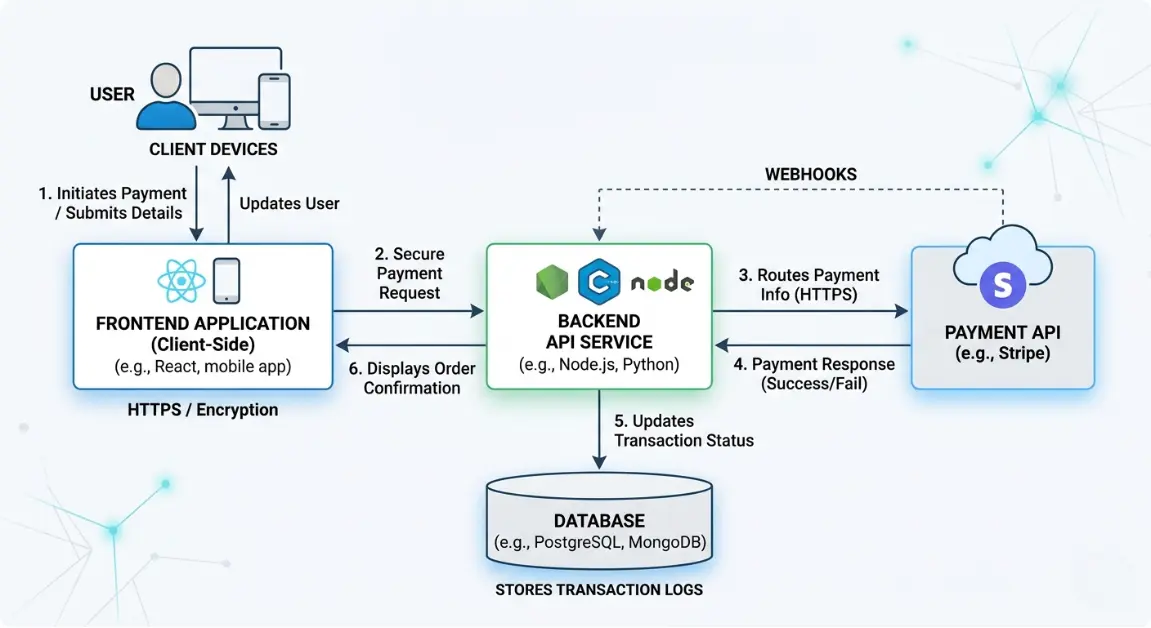
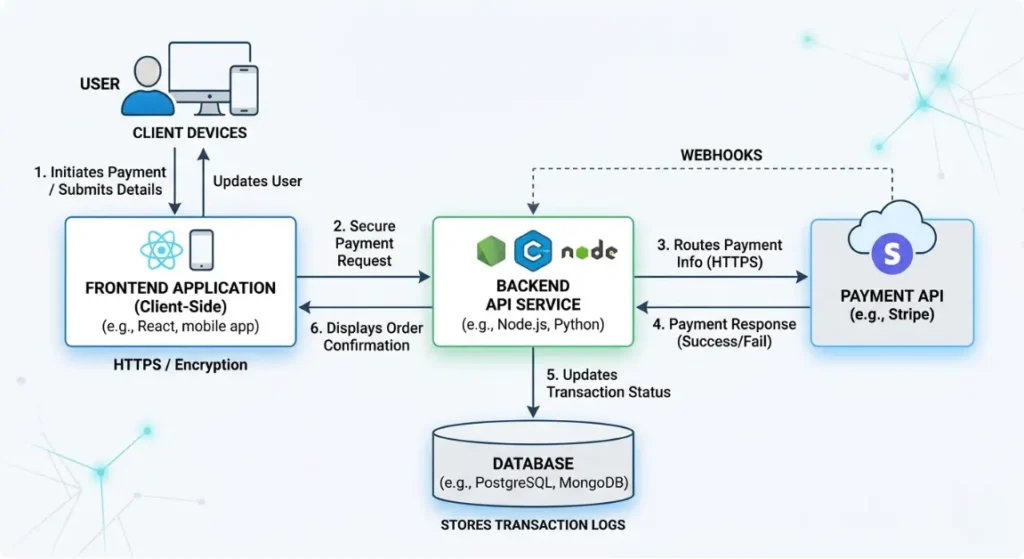
Before we talk strategy, let’s quickly see how making money physically plugs into your app. Think of your app as a digital store.
- Frontend (The Storefront): This is where your customers see the “price tags.” It’s the pricing page, the “Upgrade Now” buttons, and the checkout forms. It has to be clear, trustworthy, and easy to navigate.
- Backend (The Cash Register & Manager’s Office): This is the brains of the operation. It securely connects to payment processors, manages who has paid for what (subscriptions), and controls access to premium features. It’s the core of your monetization logic.
- Database (The Customer Ledger): This is where you keep track of every customer, their subscription status, their payment history, and what plan they’re on.
- APIs (The Banking System): You don’t build your own credit card processing network. You use a third-party API like Stripe or Braintree. These are secure messengers that handle the sensitive financial data, making web-based payment processing for apps both possible and safe.
Your monetization strategy dictates how all these pieces talk to each other. Now, let’s look at the strategies themselves.
The Top Web App Monetization Strategies for 2026
The one-size-fits-all model is dead. Today, the most successful companies are often using a mix of these approaches. Here are the core web app monetization strategies that work in 2026.
1. The Classic Subscription (SaaS)
Overview: The bread and butter of the modern web. Users pay a recurring fee (monthly or annually) for ongoing access to your application. This is the model used by Netflix, Slack, and thousands of other businesses.
Best For: Apps that provide continuous, ongoing value. If your users need your tool every day, week, or month, a subscription makes sense.
| Pros | Cons |
| – Predictable, recurring revenue- Builds customer loyalty- Easier to forecast business growth | – You must constantly provide value to prevent churn- “Subscription fatigue” is real for consumers- Harder to acquire initial users than a free model |
Estimated Cost to Implement: Integrating a subscription service like Stripe or Chargebee is a standard developer task. Expect to pay $2,000 – $10,000 in development time to get it set up correctly.
Real-World Use Case: A project management tool like Asana. Teams use it daily to manage their work, so a monthly fee for the service is a natural fit. This is the foundation of many web app monetization strategies that work in 2026.
2. Freemium: The Ultimate “Try Before You Buy”
Overview: You offer a basic version of your app for free, forever. Users can then upgrade to a paid plan to unlock more advanced features, higher limits, or remove restrictions. Spotify and Dropbox are classic examples.
Best For: Apps with the potential for a very large user base. The free plan acts as a powerful marketing engine, and you convert a small percentage of those free users into paying customers.
| Pros | Cons |
| – Lowers the barrier to entry, driving user acquisition- Free users can become brand advocates- Acts as a living demo of your product | – The free plan can be expensive to support- The free features might be “too good,” reducing the incentive to upgrade- Conversion rates can be low (1-5% is common) |
Real-World Use Case: web app monetization strategies that work in 2026 Mailchimp. You can use it for free for up to 500 contacts. As your email list grows, you seamlessly transition into a paying customer.
3. Usage-Based or Metered Billing
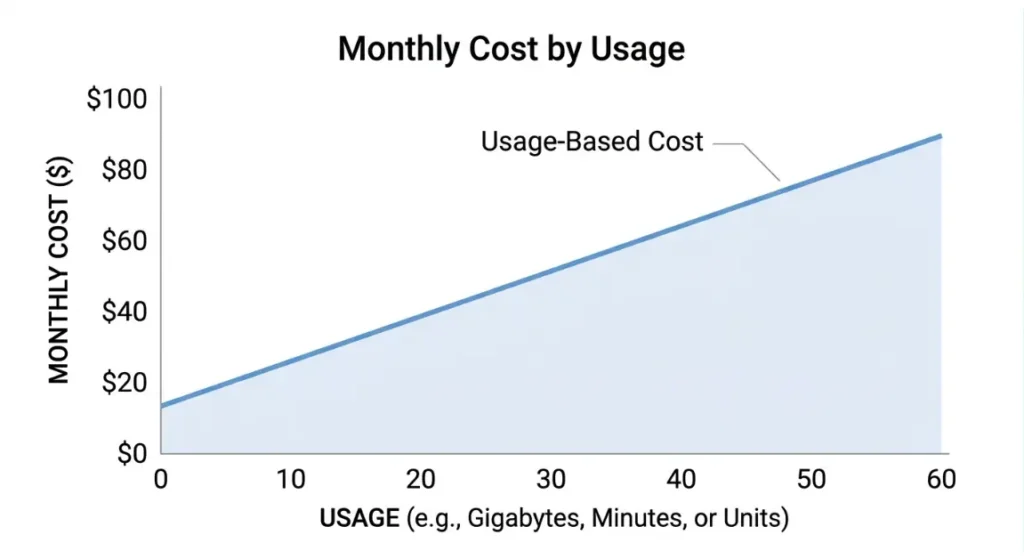
Overview: Web app monetization strategies that work in 2026 This is the “pay-as-you-go” model. Instead of a flat fee, customers are charged based on how much they use the service. Think of it like your electricity bill. This is one of the most popular usage-based SaaS pricing strategies today.
Best For: API-based products or platforms where value is directly tied to consumption. Examples include cloud hosting (AWS) web app monetization strategies that work in 2026, sending emails (SendGrid), or processing payments (Stripe).
| Pros | Cons |
| – Aligns cost directly with value for the customer- Lowers the barrier to entry for small users- Can scale to be very profitable with large users | – Revenue can be less predictable than a flat subscription- Can be complex to track usage and bill correctly- Customers may fear a surprise high bill |
Real-World Use Case: Twilio, a communication platform. You pay per text message sent or per minute of phone call. You’re charged for exactly what you use. This has become a cornerstone of modern web app monetization strategies that work in 2026.
4. Transaction Fees or Commissions
Overview: You facilitate a transaction between two parties and take a small percentage cut. This is the model that powers marketplaces.
Best For: Any platform that acts as a middleman: e-commerce marketplaces (Etsy, eBay), booking platforms (Airbnb), or payment processors (Stripe, PayPal).
| Pros | Cons |
| – Revenue scales directly with the success of your users- No upfront cost to users, which encourages adoption- A very fair and transparent model | – You need a high volume of transactions to be profitable- You’re vulnerable to “platform leakage” (users taking transactions off-platform to avoid the fee) |
Real-World Use Case: Airbnb. They don’t charge hosts to list their property. They simply take a percentage of every successful booking.
5. Advertising (The Privacy-First Approach)
Overview: You offer your app for free and make money by showing ads to your users. In 2026, the key is to move away from creepy, web app monetization strategies that work in 2026 invasive tracking. Privacy-first ad targeting methods like contextual advertising (showing ads related to the content on the page) or selling sponsorships are the future.
Best For: High-traffic consumer apps where the content is the main attraction, like online magazines, forums, or simple tools.
| Pros | Cons |
| – Completely free for the user, leading to maximum reach- Can be very lucrative with massive traffic | – Ads can degrade the user experience- Ad revenue is notoriously volatile- Ad-blockers can significantly impact revenue |
Real-World Use Case: A popular recipe website. It can run ads for kitchen gadgets or specific ingredients alongside a recipe. The ads are relevant and helpful, not based on your private browsing history. Learning how to combine subscriptions and in-app ads without losing users is a key skill for this model.
6. The Hybrid Model: Mixing and Matching
Overview: This is increasingly the most popular and effective of all web app monetization strategies that work in 2026. You combine two or more of the models above. For example, a “Freemium + Ads” model where free users see ads, but can pay to remove them and get extra features.
How to Implement AI in Small Business Complete Guide (2026)
Best For: Almost any app. Hybrid app monetization models 2026 offer the flexibility to capture revenue from different types of users.
Popular Combinations:
- Subscription + Usage-Based: A flat monthly fee that includes a certain amount of usage, with overage charges for heavy users.
- Freemium + Transaction Fees: A marketplace that is free to use, but offers premium tools for power sellers for a monthly fee.
- Subscription + Ads: A news site that lets free users read 3 articles with ads, but offers unlimited, ad-free access to subscribers.
Real-World Use Case: YouTube. It uses a hybrid model perfectly. It’s free with ads, but you can subscribe to YouTube Premium to remove ads and get extra features like background play.
Monetization Mistakes to Avoid
Choosing the right strategy is only half the battle. You also need to avoid common pitfalls.
- Hiding Your Pricing: Don’t make users hunt for your pricing page or force them to “Contact Sales” for a simple plan. Be upfront and transparent. This builds trust.
- Making It Too Complicated: A pricing page with 10 different tiers and a dozen add-ons will confuse and paralyze your users. Start with 2-3 clear options. You can add more later.
- Changing Prices Too Often (or Incorrectly): While you should experiment, changing your core pricing every few months will frustrate your users. When you do raise prices, always apply it to new customers only. Grandfathering in your existing users at their old price is crucial for reducing churn in subscription-based web applications for small businesses.
- Not Aligning Price with Value: Don’t charge for features. Charge for outcomes. Instead of a “reporting” feature, sell a “Business Intelligence” plan that helps them make more money. Your pricing tiers should be based on the value a customer receives.
How to Deploy Web Application for Free 2026 (Beginner Guide)
Monetization Model Comparison Table
Here’s a cheat sheet to help you compare the most common web app monetization strategies that work in 2026.
| Strategy | Best For | Predictability | User Barrier | Business Rating |
| Subscription | Ongoing value (SaaS) | High | Medium | ⭐⭐⭐⭐⭐ |
| Freemium | Mass-market apps | Medium | Very Low | ⭐⭐⭐⭐ |
| Usage-Based | API/Platform products | Low-Medium | Very Low | ⭐⭐⭐⭐ |
| Transaction Fee | Marketplaces | Medium | Low | ⭐⭐⭐⭐ |
| Advertising | High-traffic content | Low | None | ⭐⭐⭐ |
| Hybrid | Most modern apps | High | Flexible | ⭐⭐⭐⭐⭐ |
Rating meaning:
- ⭐⭐⭐⭐⭐ = A top-tier, highly effective strategy for many modern businesses.
- ⭐⭐⭐⭐ = A powerful and proven model in the right context.
- ⭐⭐⭐ = Can work, but often has significant challenges or is niche.
The Tech Behind the Money: Sample Stacks
Your monetization strategy influences your tech choices. Here’s how web-based payment processing for apps fits into a few common stacks.
The Ultimate best frontend framework for beginners 2026 ranking Guide
Stack 1: The Simple Subscription SaaS
- Frontend: React / Next.js
- Backend: Node.js / Python (Django)
- Database: PostgreSQL
- Payment API: Stripe Subscriptions or Chargebee. These platforms handle all the recurring billing logic, dunning (failed payment recovery), and subscription management for you.
- Best For: Any business wanting to quickly implement a powerful subscription model.
Stack 2: The Usage-Based API
- Frontend: A documentation site and a developer dashboard.
- Backend: A highly-performant language like Go or Node.js.
- Database: A time-series database for tracking usage events.
- Payment API: Stripe Billing. It has built-in features for metered billing, allowing you to charge based on custom usage metrics.
- Best For: Developer tools and platforms implementing usage-based SaaS pricing strategies.
Stack 3: The Freemium Marketplace
- Frontend: Next.js for good SEO and fast performance.
- Backend: A robust framework like Ruby on Rails or Django.
- Database: PostgreSQL.
- Payment API: Stripe Connect. It is specifically designed for marketplaces to facilitate payments between buyers and sellers while handling your commission.
- Best For: Any business building a platform to connect two or more parties.
Related Articles You Might Like
If you’re exploring web app monetization strategies that work in 2026, you’ll find our guide on “Micro-subscription vs. Annual Plans” essential reading. We break down the pros and cons of different billing cycles and how they impact churn and cash flow.
How Much Does It Cost to Build a Simple Web App (2026 Guide)
Frequently Asked Questions
1. What is the most popular monetization strategy in 2026?
The Hybrid model is by far the most dominant. Very few successful apps rely on a single source of revenue. The most common combination is a Freemium model with multiple paid Subscription tiers, and sometimes a usage-based component for heavy users.
2. How do I choose the right strategy for my app?
Start with your users. What provides the most value to them? Align your pricing with that value. If your app saves them 10 hours a month, a subscription is a great fit. If it helps them make a sale, a transaction fee is perfect. Don’t pick a model just because it’s trendy; pick the one that makes the most sense for your business.
3. How can I use AI in my pricing strategy?
AI is becoming a powerful tool for optimizing revenue. The best AI tools for personalizing app pricing and offers in 2026 can analyze user behavior to identify which customers are most likely to upgrade and what features they value most. They can also help you test different price points and offers in real-time to maximize conversion without manual guesswork.
4. How do I implement subscriptions without being a developer?
Platforms like Shopify (for e-commerce) and Memberstack or Outseta (for web apps) allow you to add subscription and payment functionality to your site with minimal to no code. These are great options for founders who want to validate an idea before investing in custom development.
5. How do I reduce churn in my subscription app?
First, make sure your app provides ongoing value. Second, nail your onboarding to ensure users experience that value quickly. Third, use dunning management tools (offered by Stripe, etc.) to automatically handle failed payments. Finally, consider offering a discount for annual plans. This is a key part of reducing churn in subscription-based web applications for small businesses.
Final Thoughts
Your product is what you sell, but your monetization model is how you sell it. In 2026, users expect flexibility, transparency, and fairness. The rigid, one-size-fits-all approaches of the past are giving way to smarter, more adaptable hybrid models that offer a clear path from free user to loyal, paying customer.
The Complete Web Application Development Guide for Small Businesses (2026)
Don’t be afraid to start simple. Launch with a straightforward subscription or freemium model. Talk to your users, watch how they behave, and don’t be afraid to experiment and evolve. The most successful web app monetization strategies that work in 2026 are not set in stone; they are living, breathing parts of the business that grow and adapt right alongside your product.
Call To Action
What monetization strategy are you using for your web app? What has worked, and what hasn’t? Share your experience in the comments below your story could be the insight another founder needs. For more deep dives into building a successful web business, subscribe to our newsletter.
Leave a Reply