So, you’ve got it. The “Million Dollar Idea.” You can already see the dashboard, the sleek login screen, and the notification pings of new customers signing up. Your first instinct is probably to call a developer (like me) or start hunting for a freelance design workflow that can bring your vision to life.
But here is a dose of caffeine-fueled honesty from someone who has spent a decade in the trenches of software architecture: Don’t write a single line of code yet.
The biggest mistake I see small business owners make isn’t choosing the wrong database or a slow hosting provider it’s building a polished, expensive solution for a problem that doesn’t actually exist. In this guide, I’m going to walk you through how to validate your web app idea before building, saving you thousands of dollars and months of wasted effort. We’ll talk about the “smoke and mirrors” phase, how to talk to users, and the technical shortcuts that let you test the waters without drowning in development costs.
Why This Matters for Small Businesses
In the world of small business, your capital is your oxygen. You can’t afford to spend $30,000 on a custom app only to realize that your customers prefer a simple Google Sheet.
I once worked with a local boutique gym owner. He was convinced his members needed a custom-built mobile and web app to track their PRs (personal records) and book classes. He was ready to drop his entire marketing budget for the year on it. I asked him, “Have you asked them if they’ll use it?” He said he just knew they would.
We paused the build and set up a “fake” landing page a simple site explaining the app’s features with a “Join the Waitlist” button. We ran $200 in Facebook ads to his current members. The result? People clicked, but when they saw the feature list, they started emailing him asking if they could just keep using the existing WhatsApp group because it was easier. How to validate your web app idea before building isn’t just a “startup” concept; it’s a survival tactic. By spending $200, he saved $25,000.
Most small businesses fail at software because they build for their own ego rather than the customer’s pain. If you can’t find 10 people to give you their email address (or better yet, $10) for a promise of a solution, a shiny design client portal won’t save you.
Understanding the Basics
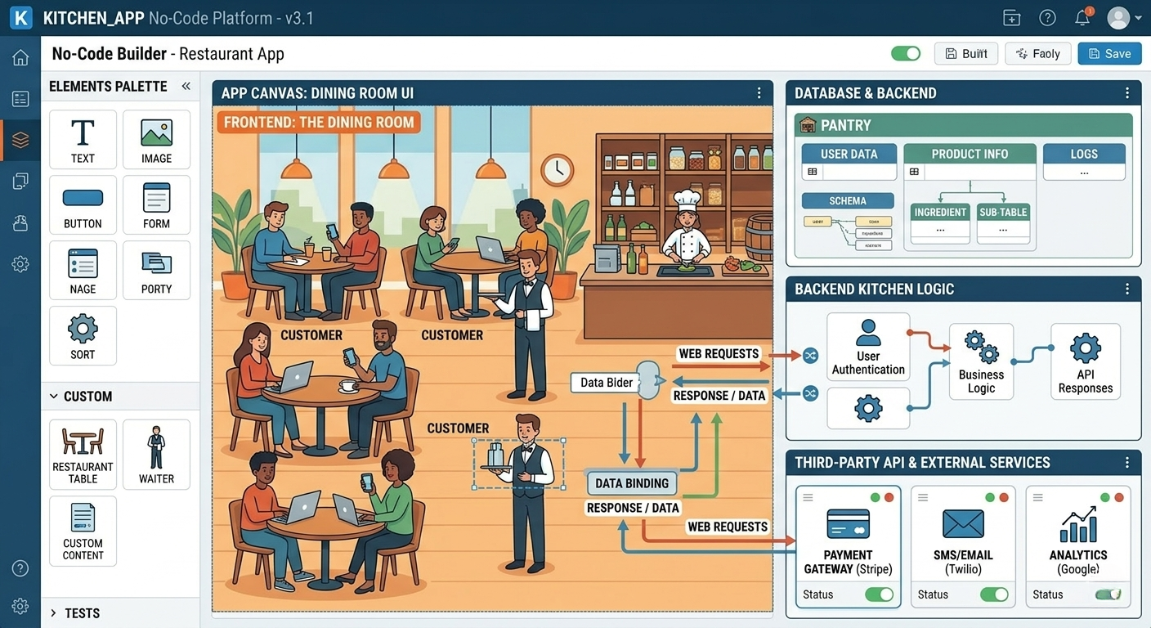
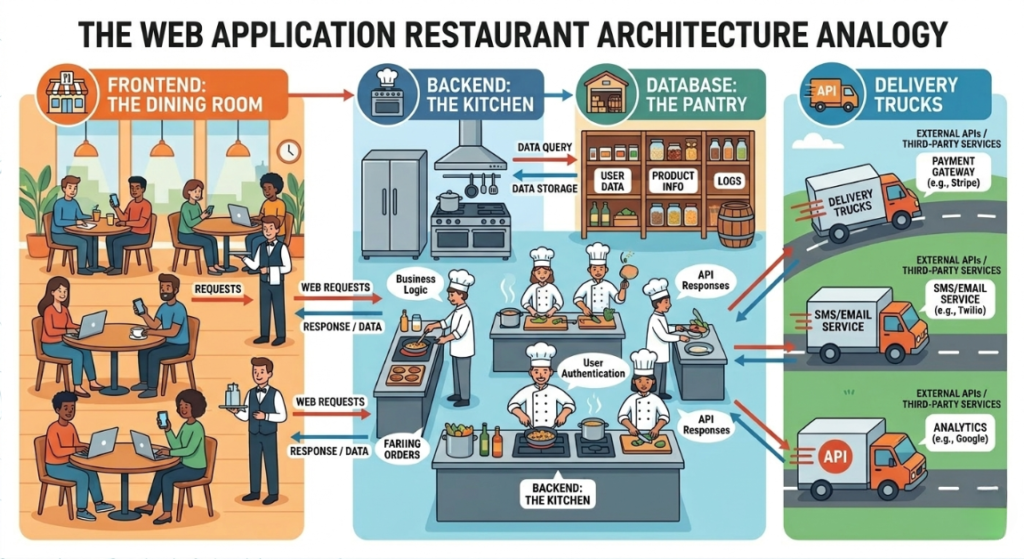
Before we dive into the “how-to,” let’s demystify what goes into a web app. Think of a web application like a high-end restaurant.
- The Frontend (The Dining Area): This is what your users see. The colors, the buttons, the layout. It’s the “vibe” and the interface.
- The Backend (The Kitchen): This is where the magic happens. It processes the orders, handles the logic, and ensures the food (data) is prepared correctly.
- The Database (The Pantry): This is where everything is stored ingredients, recipes, and customer history.
- APIs (The Servers/Waitstaff): These are the messengers that carry information between the kitchen and the dining room.
When you are learning how to validate your web app idea before building, you are essentially trying to see if people like your menu before you lease the building and hire the chefs. You can use creative project management tools to organize these thoughts, but the goal is to keep it lean.
Key Options for Validation Explained
To truly understand how to validate your web app idea before building, you need to know the tools at your disposal. You don’t always need a full tech stack to prove a concept.
The Landing Page Smoke Test
Overview
Create a one-page website that looks like the app already exists. It lists the features, the benefits, and a “Pricing” section. When someone clicks “Buy Now,” they get a message saying, “We’re in private beta! Leave your email to get early access.”
Best For
B2C apps or simple SaaS ideas.
Pros: how to validate your web app idea before building
- Extremely cheap.
- Gives you hard data on “intent to buy.”
- Builds an email list before launch.
Cons: how to validate your web app idea before building
- Doesn’t test the actual functionality.
- Can frustrate some users if not messaged correctly.
Estimated Cost
$50 – $200 (Hosting + Domain + Simple Template)
Learning Curve
Beginner
Real-World Use Case
A founder wanting to build a design agency software creates a page listing features like “Auto-Invoicing” and “File Storage.” If 100 people sign up, the idea is validated. What is API Integration in Web Development Explained (2026).
The “Concierge” MVP
Overview
Instead of building an automated system, you perform the service manually. If you’re building an AI-based scheduling app, you literally sit at your desk and manually email the users pretending to be the AI.
Best For
Service-based web apps and complex logic.
Pros: how to validate your web app idea before building
- Zero coding required.
- Deeply understand customer pain points.
- You can charge real money immediately.
Cons: how to validate your web app idea before building
- Not scalable (you’ll get tired fast!).
- Requires a lot of your personal time.
Estimated Cost
$0 – $100 (Just your time and basic communication tools).
Learning Curve
Beginner
Real-World Use Case
Zappos started this way. The founder took photos of shoes at the mall, put them on a website, and when someone bought a pair, he went to the mall, bought them, and mailed them.
No-Code Prototypes (Bubble / Webflow)
Overview
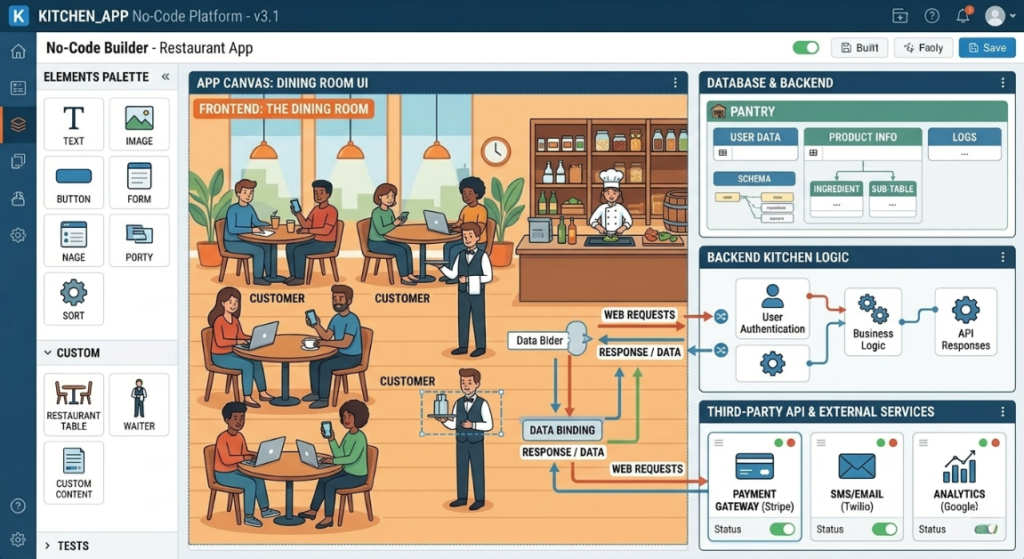
Using “drag-and-drop” builders to create a functional app. These tools allow you to build databases and logic without writing code. This is a huge part of how to validate your web app idea before building in 2026.
Best For
Internal business tools or simple marketplaces.
Pros: how to validate your web app idea before building
- Much faster than traditional coding.
- Lower initial investment.
- Easy to pivot.
Cons: how to validate your web app idea before building
- Performance can lag with many users.
- You don’t “own” the source code in the traditional sense.
Estimated Cost
$500 – $3,000 (If hiring a specialist) or $29/mo (Self-built).
Learning Curve
Moderate
Real-World Use Case
A freelance designer building a simple task tracker for freelance web designers using Bubble to test the workflow with 50 peers.
Paid Ads (The “Audit” Method)
Overview
Run small ad campaigns on Google or LinkedIn targeting keywords related to your problem. See if people are even searching for a solution.
Best For
B2B tools and niche software.
Pros: how to validate your web app idea before building
- Fast results (24-48 hours).
- Validates “Search Intent.”
Cons: how to validate your web app idea before building
- Can get expensive if you don’t know ad platforms.
- High “noise” to “signal” ratio.
Estimated Cost
$200 – $1,000
Learning Curve
Moderate
Real-World Use Case
Running ads for “best design client portal for small teams” to see the Click-Through Rate (CTR).
Options to Avoid (Common Mistakes)
When you are figuring out how to validate your web app idea before building, it is very easy to fall into the “Engineer’s Trap.” Here is what to steer clear of:
- Over-Engineering the MVP: I’ve seen founders spend months setting up a “Scalable AWS Architecture” for an app that has zero users. What to do instead: Use a simple PaaS (Platform as a Service) like Heroku or Vercel. Don’t worry about 1 million users until you have 100.
- Building for Every Device: Don’t build an iOS app, an Android app, and a Web app simultaneously. What to do instead: Start with a Responsive Web App. It works on everything through the browser and costs a fraction of the price.
- The “Hidden” Launch: Waiting until the app is “perfect” to show anyone. What to do instead: Show the ugly version. If people use it despite it being ugly, you have a winner. If they won’t use it because a button is the wrong shade of blue, the problem isn’t the design it’s the value proposition.
- Ignoring the “Freelance Design Workflow”: If your app involves a process, don’t ignore how users currently do it. If you build a managing design projects tool that is harder to use than an Excel sheet, you will fail.
Technology Comparison Table
| Validation Method | Best For | Difficulty | Cost | Business Rating |
| Landing Page | Testing Interest | Easy | Low | ⭐⭐⭐⭐⭐ |
| Concierge MVP | Testing Value | Easy | Very Low | ⭐⭐⭐⭐⭐ |
| No-Code App | Testing Features | Medium | Medium | ⭐⭐⭐⭐ |
| High-Fidelity Mockups | Pitching Investors | Medium | Low/Medium | ⭐⭐⭐ |
| Custom Code MVP | High-Tech Logic | Hard | High | ⭐⭐ |
Sample Web App Tech Stacks (Post-Validation)
Once you know how to validate your web app idea before building and you’ve actually done it, you’ll eventually need to build the real thing. Here are three directions I usually recommend:
Stack 1: The “Speed to Market” Stack
- Frontend: Next.js (React)
- Backend: Supabase (Database + Auth)
- Hosting: Vercel
- Estimated Cost: $0 – $25/month
- Best For: MVP startups and managing design projects tools.
Stack 2: The “Small Business Standard”
- Frontend: Vue.js
- Backend: Laravel (PHP)
- Database: MySQL
- Hosting: DigitalOcean
- Estimated Cost: $20 – $60/month
- Best For: Internal business tools and CRUD applications.
Stack 3: The “Enterprise Grade”
- Frontend: React
- Backend: Python (Django)
- Database: PostgreSQL
- Hosting: AWS (Amazon Web Services)
- Estimated Cost: $100+/month
- Best For: Complex data processing or AI-integrated apps.
Cost Breakdown
Let’s talk numbers. When you’re past the validation stage, the “real” build starts.
- Validation Phase: $100 – $2,000. This covers ads, landing page tools, and perhaps a design agency software subscription to manage your notes.
- Development (Freelancer): $3,000 – $15,000. This is usually a solo dev building your first functional version.
- Development (Agency): $20,000 – $100,000+. You’re paying for a project manager, a designer, and multiple devs.
- Ongoing Maintenance: Budget 15-20% of your initial build cost per year for hosting, security patches, and minor bug fixes.
Pro Tip: If you want to know how to manage multiple freelance design clients or developers, use a centralized portal. Clear communication reduces hours, and hours are money.
Related Articles You Might Like
If you’re currently deep in the “how to validate your web app idea before building” phase, you might also find these helpful:
- How to Choose the Right Tech Stack in 2026: A deep dive into why I prefer Next.js over traditional setups. How to Choose Tech Stack for Web Development Project (2026)
- The Best Project Management App for Solo Graphic Designers: If you’re building for designers, you need to see what the competition looks like. Web App vs Mobile App in 2026: Which to Choose?
- Hiring Your First Developer: A checklist to ensure you don’t get “ghosted” or overcharged. The Complete Web Application Development Guide for Small Businesses (2026)
Frequently Asked Questions
How long does it take to validate a web app idea?
Usually, you can get a solid “Yes” or “No” in 2 to 4 weeks. The first week is for setting up your landing page or concierge process, and the next three weeks are for driving traffic and talking to users. If you spend 6 months “validating,” you’re actually just procrastinating on the build.
What is the best way to find people to talk to?
Go where they hang out. If you’re building a best project management app for solo graphic designers, go to Reddit (r/graphicdesign), Facebook groups, or local networking events. Don’t ask “Would you use this?” Ask “What is the biggest pain in your current workflow?” Listen more than you speak.
Should I sign an NDA before telling people my idea?
Honestly? No. In 10 years of dev work, I’ve never seen an idea stolen, but I’ve seen hundreds die because the founder was too afraid to talk about it. Execution is everything. Your “secret sauce” is usually how you solve the problem, not the problem itself.
Can I validate an idea without any money?
Yes. Use the Concierge method. Use a Google Form as your “app interface” and your personal email as the “backend.” If you can provide value using free tools, you’ve successfully learned how to validate your web app idea before building for $0.
What’s the biggest sign an idea is validated?
When someone asks, “How can I pay for this right now?” or “When will this be ready?” If you get 10 people asking that, you have a green light to start the actual development process.
Final Thoughts
Learning how to validate your web app idea before building is the difference between being a “dreamer” and being a “founder.” I’ve seen too many brilliant people lose their savings because they fell in love with a feature instead of a problem.
Start small. Be “scrappy.” Use a simple task tracker for freelance web designers to keep your own validation tasks on track. Remember, the goal of validation isn’t to prove you are right it’s to find out if you are wrong as quickly and cheaply as possible.
Build the landing page. Talk to the customers. Get the data. Then, and only then, let’s talk about the code.
Call To Action
Ready to take the first step? Don’t do it alone! Drop a comment below with your app idea (don’t worry, we’re all friends here), and I’ll give you a quick tip on the best way to validate it.
Want more tips on tech and business growth? Subscribe to our newsletter for weekly “Developer over Coffee” insights delivered straight to your inbox!]
Leave a Reply